
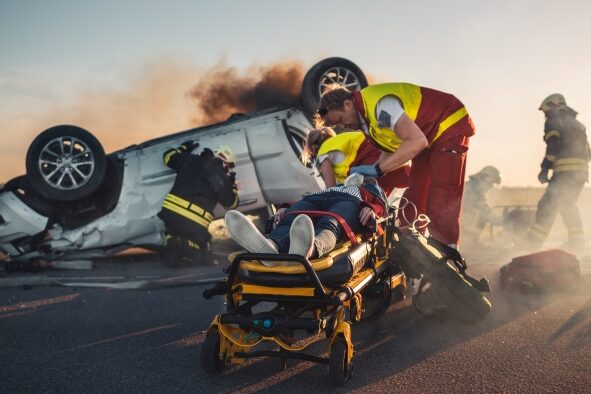
The minutes after a crash are chaotic, but a clear order of priorities protects your health, your evidence, and your legal rights. Get to safety first, call for emergency help when anyone is hurt, then exchange information and document the scene before it changes.
From there, obtain medical care, complete any required California crash reports, and notify your insurer carefully. Finally, preserve every record tied to the collision and review your deadlines, coverage, and any settlement paperwork with a Southern California personal injury lawyer before you sign a release.
The eight steps below walk through that sequence in the order most Southern California drivers will need them.
Step 1: Get to Safety and Call 911 When Needed
Your first job is to avoid a second collision. If your vehicle is drivable and sitting in a hazardous spot, move it out of active lanes and turn on your hazard lights. If it cannot be moved safely, get yourself and your passengers to a protected area away from traffic.
Call 911 whenever someone is injured, a vehicle is blocking traffic, or you see fire, leaking fuel, or downed power lines. Do not move a person who appears seriously injured unless they face an immediate danger such as fire, because movement can worsen certain injuries.
Serious, life-altering harm — such as a head, spine, or internal injury — can later support catastrophic injury claims, so let trained responders handle anyone who is badly hurt.
Step 2: Exchange Driver, Vehicle, and Insurance Information
Trade the details you will need to open a claim. Collect each driver's full name, phone number, and address, plus their driver's license number and the vehicle's license plate.
Write down the insurance company and policy number for every vehicle involved, and note the registered owner if that person is not the driver. If a vehicle is commercial, record the company name and employer as well, since those crashes often involve additional coverage and are handled more like truck accident claims than standard collisions.
Stay factual and civil during the exchange, even if the other driver is upset.
Step 3: Photograph and Record the Scene Before It Changes
Evidence at the scene disappears fast once vehicles are towed and traffic resumes. Use your phone to capture wide shots and close-ups of both vehicles' positions and damage before anything is moved.
Photograph the surrounding conditions too: the roadway, weather, skid marks, traffic signs and signals, and any debris. If injuries are visible and it is appropriate to do so, document those as well, along with anything unusual about how the crash happened.
Ask Witnesses for Contact Information
Independent witnesses can confirm what happened, but they scatter quickly and are rarely identifiable later. Politely ask anyone who saw the crash for their name and phone number before they leave.
Preserve Dashcam, Doorbell, and Nearby Business Video
Video is often the strongest evidence, yet many systems overwrite footage within days. Save and back up any dashcam clips right away, and note nearby homes or businesses whose doorbell or security cameras may have recorded the crash so that footage can be requested before it is lost.
Do Not Argue About Fault at the Scene
Cooperate with police and share accurate facts, but avoid apologizing, guessing, or speculating about who caused the crash. Statements made in a stressful moment can be taken out of context, and fault is determined later based on the full evidence.
Step 4: Get Medical Attention and Track Symptoms
Accept paramedic evaluation at the scene if it is offered, and seek emergency care for any red-flag symptoms such as loss of consciousness, chest pain, difficulty breathing, severe bleeding, numbness, or a serious headache. When in doubt, get checked the same day.
Some injuries — including concussions and soft-tissue damage — take hours or days to surface, so a follow-up visit matters even if you initially feel fine. Keep every record, referral, and receipt, and tell each provider the symptoms are related to a car crash so your care is documented consistently.
Consistent medical records connect your injuries to the collision, which becomes important if you later pursue a claim.
Step 5: Complete California Reporting Requirements
California treats police reporting and DMV reporting as two separate duties. Officers may prepare a report at the scene, and you can request a copy for your records, but you may still have a personal filing obligation with the DMV.
Drivers are generally required to file an SR-1 form with the DMV after a crash that caused injury, death, or property damage above the state threshold, and this is separate from any police report.
You can review the official requirements through the California DMV — SR-1 accident reporting page and confirm your specific duty there.
Step 6: Notify Insurance Without Guessing About Injury or Fault
Report the crash to your own insurer promptly, as most policies require timely notice. Give the basic facts — date, time, location, vehicles, and a claim or incident number once assigned — and keep that claim number for your files.
Be cautious with the other driver's insurer. You are generally not required to give a recorded statement to the other side's company or to sign broad medical authorizations, and it is reasonable to seek legal guidance before doing either.
Avoid guessing about the extent of your injuries or who was at fault, since early speculation can be used against you. For a neutral overview of your rights, the California Department of Insurance — auto insurance guides explain how the claim process works.
Step 7: Preserve Bills, Wage Records, Photos, and Damaged Property
Build a single organized file for everything tied to the crash. Keep medical bills, treatment notes, prescription receipts, and any records showing missed work or lost wages, along with the scene photos and repair estimates.
Where it is practical, hold off on repairing or disposing of damaged property until it has been photographed and documented, because the item itself can be evidence. A damaged bike helmet, child seat, or crushed bumper often tells the story better than a description does.
The state's guidance on gathering evidence for a personal injury case explains why this documentation matters if a claim moves forward.
Step 8: Review Deadlines, Coverage, and Any Release Before Settling
Time limits and coverage details can quietly decide the outcome of a claim. California sets a deadline (a statute of limitations) for filing an injury lawsuit, and separate, shorter deadlines can apply when a government vehicle or public entity is involved.
Check your own coverage as well. Uninsured and underinsured motorist (UM/UIM) coverage may apply if the other driver has little or no insurance, and medical liens may need to be addressed out of any recovery.
Be especially careful with any settlement release. Signing one is typically final and can permanently end your right to seek more compensation, even if your injuries turn out to be worse than they first appeared, so it is worth a legal review before you sign.
Call Westlake Injury Law After a Southern California Car Accident
If you were hurt in a crash anywhere in the Ventura or Los Angeles area, you do not have to sort through reporting rules, insurers, and deadlines on your own. Westlake Injury Law handles car accident claims for Southern California victims and can help protect your evidence and your options before you talk to the other side.
Learn more about Westlake Injury Law, or contact Westlake Injury Law to discuss your situation. Call (805) 338-6880 for a consultation.
Post-Accident Frequently Asked Questions
Do I Need to Report Every California Accident to the DMV?
Not every crash triggers a DMV filing, but many do. An SR-1 is generally required when a crash caused injury, death, or property damage above the state threshold, and it is separate from any report the police make.
What if I Feel Fine Right After the Crash?
Feeling fine at the scene does not always mean you are uninjured. Adrenaline can mask pain, and some conditions — such as concussions or soft-tissue injuries — can take hours or days to develop, so a prompt medical evaluation is a sensible precaution.
Should I Talk to the Other Driver's Insurance Company?
You can be polite, but you are generally not obligated to give a recorded statement or sign broad authorizations for the other driver's insurer. Many people choose to seek legal guidance before providing statements or signing anything.
What if the Other Driver Has No Insurance?
You may still have options. Uninsured or underinsured motorist coverage on your own policy can sometimes apply, depending on the terms, and other coverage may come into play as well.