
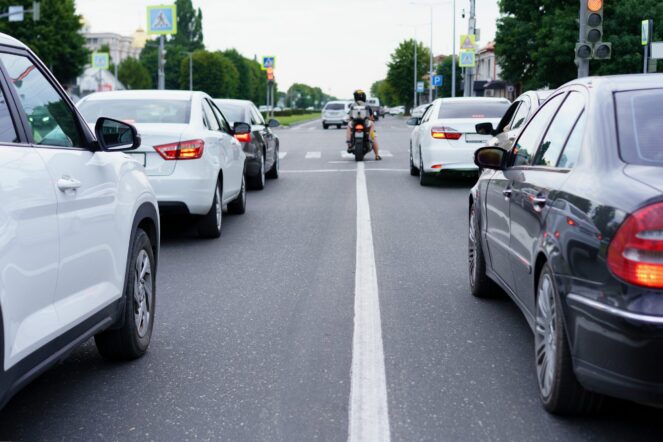
California is the only state in the country where lane splitting is explicitly recognized and permitted by law. For motorcyclists navigating congested freeways in Los Angeles, Ventura County, and throughout the state, this can be a practical and time-saving option. The issue for motorcyclists is that legality and safety are not the same thing, and the fact that lane splitting is allowed under California law does not mean it comes without serious risk.
At Westlake Injury Lawyers, we represent motorcyclists who have been injured in crashes throughout Southern California, including accidents that involve lane splitting. If you've been hurt in a motorcycle accident and aren't sure where your legal rights stand, call us today at (805) 338-6880.
Is Lane Splitting Legal In California?
Yes, lane splitting is legal in California, and California is the first and still the only U.S. state to formally legalize the practice. Motorcyclists here have the legal right to ride between lanes of stopped or slow-moving traffic, and drivers cannot legally block or impede a motorcyclist who is lane splitting in a safe and reasonable manner.
However, legality does not eliminate risk, and it does not automatically shield a motorcyclist from fault in an accident. How, where, and at what speed a rider chooses to lane split all factors into whether the behavior was reasonable under the circumstances, and those details matter enormously when an accident leads to an injury claim.
What California Law Says About Lane Splitting
California Vehicle Code section 21658.1 defines lane splitting as driving a motorcycle between rows of stopped or moving vehicles in the same lane, including on both divided and undivided streets, roads, and highways. The statute formally authorizes the practice and directs the California Highway Patrol to develop educational guidelines around safe lane splitting behavior.
The law does not set a specific speed at which lane splitting is permitted or prohibited. Instead, it leaves the question of what constitutes safe lane splitting to a reasonableness standard, which means the facts of any given situation determine whether the rider was acting appropriately.
The Role Of CHP And DMV Safety Guidance
The California Highway Patrol and the California DMV have both issued guidance on lane splitting safety, though that guidance is advisory rather than legally binding in the way a posted speed limit would be. CHP recommendations have historically suggested that lane splitting at speeds significantly above surrounding traffic, or at higher overall speeds, increases risk substantially. The DMV includes lane splitting information in its motorcycle handbook.
In a personal injury or insurance context, this guidance can be referenced when evaluating whether a lane-splitting rider was behaving reasonably at the time of a crash, even though deviating from the guidance is not itself a per-se violation of the law.
Why Lane Splitting Can Still Be Dangerous
The legal permission to lane split does not change the physical realities that make it inherently more hazardous than riding in a dedicated lane. When a motorcycle moves between lanes of traffic, several conditions create elevated risk:
- The space between vehicles is narrow, leaving little margin for error if a car drifts even slightly
- Drivers in adjacent lanes are not expecting a vehicle to appear beside them from between lanes
- Sudden lane changes by drivers are one of the most common triggers for lane-splitting crashes
- Open car doors, mirrors, and extended vehicle loads can intrude into the splitting lane without warning
- At higher speeds, a motorcyclist has less time to react to any of these hazards
- Road surface conditions such as debris, paint lines, and drainage grates are more concentrated in the space between lanes
Even an experienced rider operating carefully and legally can be placed in a dangerous situation by the unpredictable behavior of surrounding drivers.
Common Lane Splitting Accident Scenarios
Motorcycle accidents involving lane splitting tend to follow recognizable patterns. The most common scenarios include:
- A driver changes lanes without signaling or checking mirrors and moves into the motorcyclist's path while the rider is splitting between lanes
- A driver in slow-moving or stopped traffic opens their door into the lane space, leaving the rider no time to react
- A vehicle abruptly brakes or accelerates, closing the gap the motorcyclist was moving through
- A driver who sees the motorcycle in their mirrors intentionally moves to block its path, which is illegal but does occur
- Two vehicles merge toward each other simultaneously, compressing the splitting space without warning
- A rider moving at a speed significantly above surrounding traffic cannot stop in time when conditions change ahead
In many of these scenarios, the driver's inattention or failure to check for motorcycles is the central cause of the crash, not the lane splitting itself.
How Distracted Or Inattentive Drivers Cause Motorcycle Crashes
Distracted driving is one of the leading contributors to motorcycle accidents in California, and it plays an especially significant role in lane-splitting crashes. A driver who is looking at their phone, adjusting their radio, eating, or simply not checking mirrors before changing lanes may have no awareness of a motorcyclist moving through traffic until it is too late.
The challenge for injured riders is that distraction is not always easy to prove without evidence. Phone records, dashcam footage, witness statements, and the physical evidence from the crash scene all play a role in establishing what a driver was doing in the moments before impact. Gathering and preserving that evidence quickly is one of the most important things an attorney can do after a lane-splitting accident.
Who May Be At Fault In A Lane Splitting Accident?
Fault in a lane-splitting accident depends on the specific facts of the crash. California does not assume a lane-splitting rider is at fault simply because they were splitting lanes at the time of the accident. The question is whether all parties involved were acting reasonably under the circumstances.
A driver may be primarily or entirely at fault if they changed lanes without signaling, failed to check mirrors, opened a door carelessly, or made a sudden move that cut off the rider's path. A motorcyclist may bear some fault if they were splitting at an unsafe speed, weaving aggressively through traffic, or engaging in behavior that a reasonable person would consider reckless given the conditions.
How Shared Fault Can Affect A Claim
California follows a pure comparative fault rule, which means that an injured rider can still recover compensation even if they are found to be partially at fault for the accident. However, their recovery is reduced by their percentage of fault. A motorcyclist found to be 30% at fault for a crash would recover 70% of their total damages.
Insurance companies are aware of this framework and frequently attempt to assign as much fault as possible to the rider in lane-splitting cases in order to reduce what they have to pay. Having an experienced attorney who can push back against inflated fault assignments is a meaningful advantage in these claims.
Common Injuries In Lane Splitting Motorcycle Accidents
Because motorcyclists have no structural protection around them, the injuries that result from lane-splitting crashes are often severe. Common injuries include:
- Traumatic brain injuries, even when the rider is wearing a helmet, particularly in high-impact crashes
- Burn injuries from contact with hot engine components, road surfaces, or fuel ignition
- Road rash ranging from surface abrasions to deep tissue damage requiring surgery
- Broken bones and fractures, including complex injuries to the hands, wrists, arms, and legs
- Spinal cord damage that can result in partial or complete paralysis
- Shoulder and joint injuries from impact or from the body's effort to brace during a fall
- Catastrophic injuries that result in permanent disability or long-term impairment
- Fatal injuries, in which case surviving family members may have a wrongful death claim
The severity of these injuries makes the quality of legal representation after a crash genuinely consequential. The difference between a fair settlement and an inadequate one can mean years of uncovered medical expenses and lost income.
What To Do After A Lane Splitting Crash In California
If you have been involved in a lane-splitting accident in California, the steps you take immediately afterward can significantly affect your ability to recover compensation:
- Call 911 and ensure that law enforcement responds to document the accident in an official report.
- Seek medical attention right away, even if injuries do not seem serious at the scene. Some injuries, including internal damage and traumatic brain injuries, are not immediately apparent.
- Document the scene thoroughly with photographs of the road, vehicle positions, damage, your injuries, and any relevant road conditions or signage.
- Collect contact and insurance information from all drivers involved, as well as contact information for any witnesses.
- Avoid making statements about fault or the details of the crash to anyone other than law enforcement until you have spoken with an attorney.
- Do not give recorded statements to insurance companies before consulting with legal counsel.
- Contact a California motorcycle accident lawyer at (805) 338-6880 as soon as possible to protect your rights and begin building your case.
Contact Westlake Injury Lawyers Today
Lane-splitting accident cases require an attorney who understands California's motorcycle laws, how fault is evaluated in these specific crash scenarios, and how to counter the tactics insurance companies use to minimize rider claims. At Westlake Injury Lawyers, we represent injured motorcyclists throughout Southern California and we are committed to pursuing full and fair compensation for every client we serve.
Contact us at (805) 338-6880 today to schedule your free consultation and get the guidance you need after a lane-splitting crash.